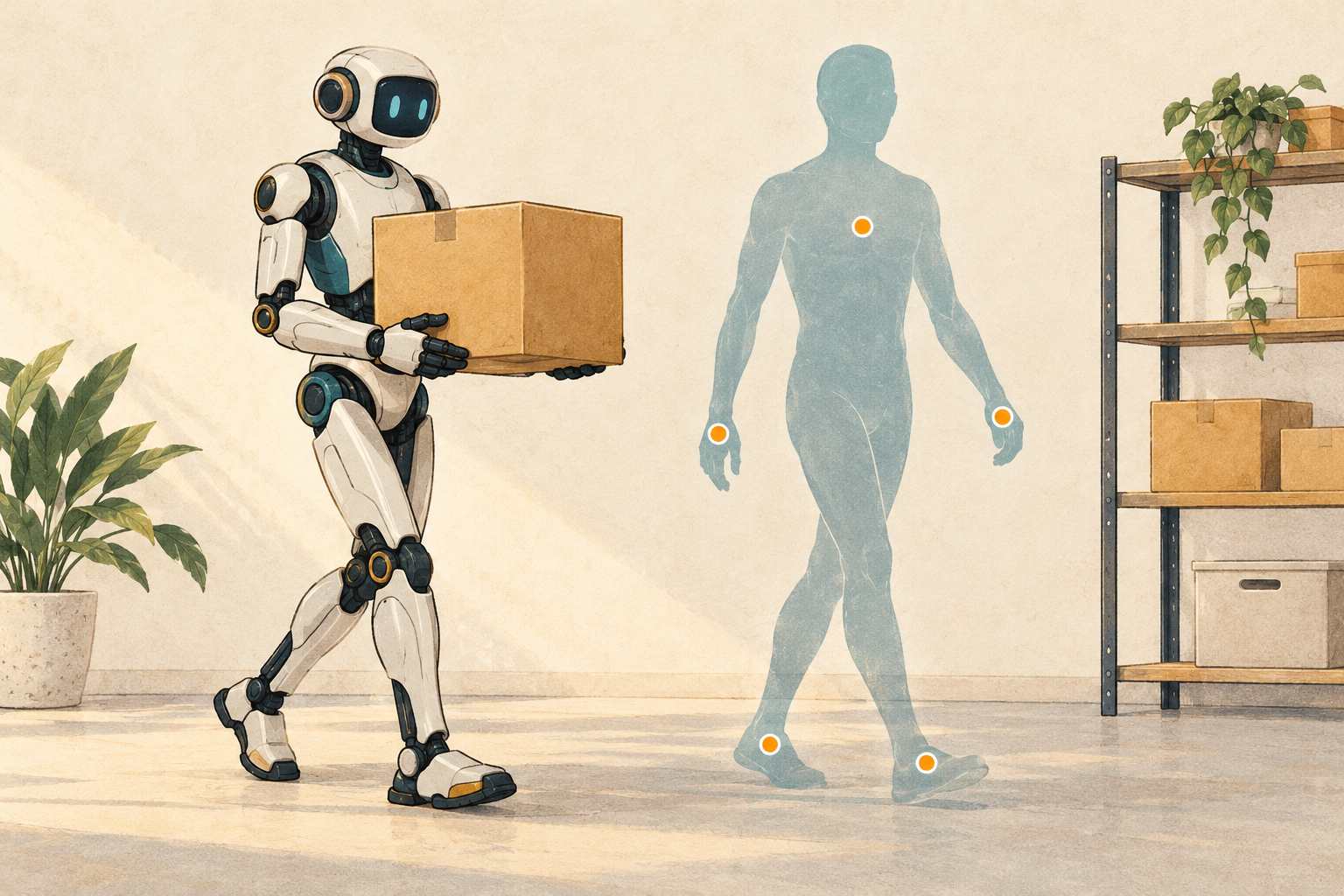
An Android phone can do a lot of things while sitting in a drawer. Walking usually isn't one of them. UCLA researchers have given a handset a pair of robotic legs, putting its camera, motion sensors and computing power to work in a small experimental humanoid called PhoneBot.
The team's October 6 preprint estimates the robot's hardware cost at about $400, excluding the phone. The central idea is economical: use electronics already packed into a familiar consumer device instead of buying and integrating a separate set for the robot. The phone sits above the hips and sends movement commands over Wi-Fi to a small computer that communicates with the motors.
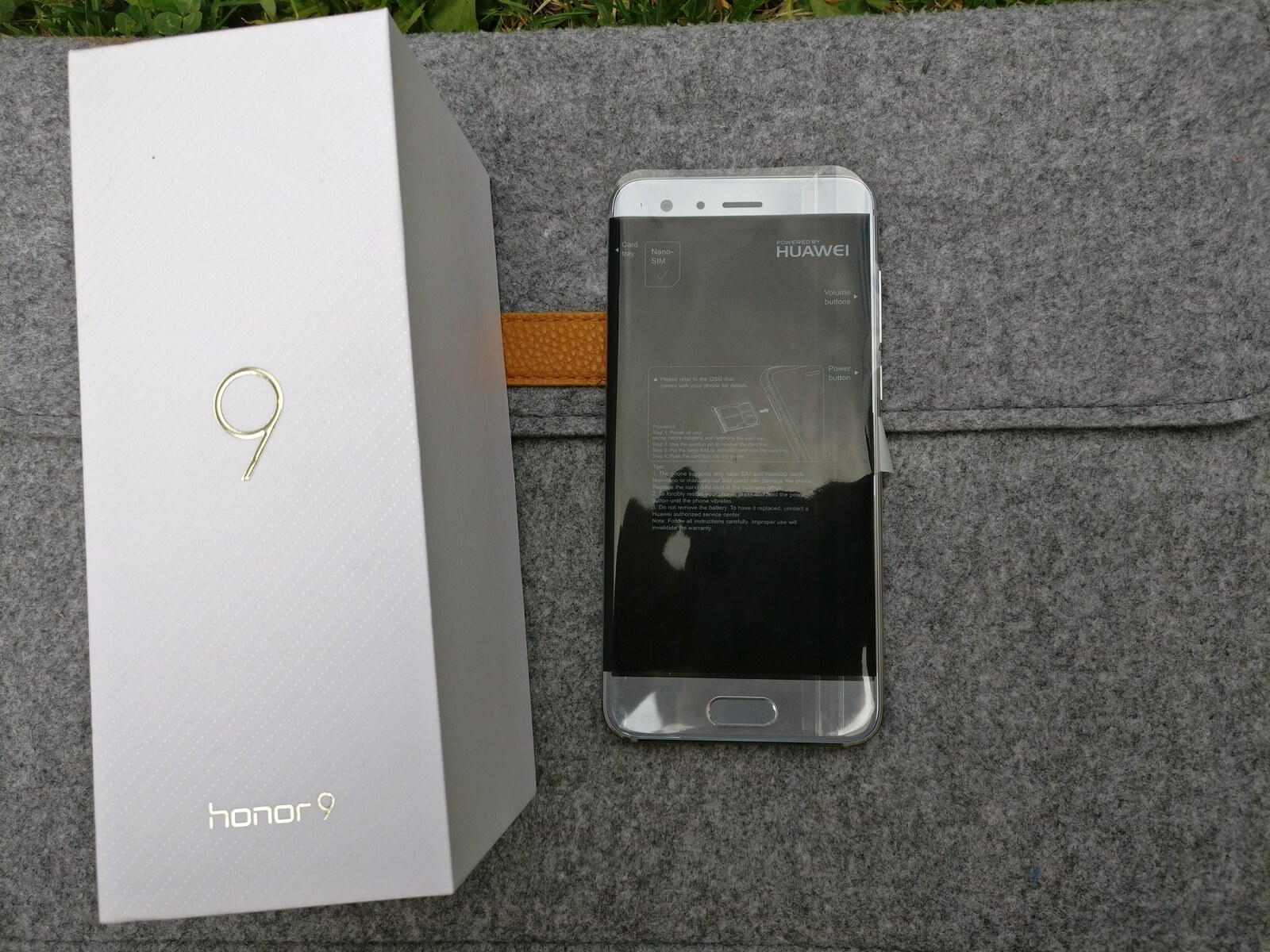
In hardware demonstrations, PhoneBot walked, tracked a person and rose from a face-down position. The researchers tested its Android application on four phones, including a 2017 Honor 9. The older handset handled core functions, though it could not run the mapping feature because the required Google services were unavailable on that device.
There are important limits. The movement controls were trained on flat ground, the robot has no arms, and its low-cost motors restrict what it can carry and how vigorously it can move. Spoken interaction still relies on an external laptop for speech recognition and language processing. These are research demonstrations, with broader autonomy and classroom benefits still to be established.
The phone-as-robot-computer idea has a useful history. In OpenBot, presented by Matthias Müller and Vladlen Koltun, an Android handset powered a small wheeled body costing about $50. Their experiments demonstrated person-following and autonomous navigation. Its public repository separates the practical work into building the body, preparing the controller, installing Android apps and training driving software. That earlier project offers a concrete example of how a consumer device can become part of a research tool.
PhoneBot adds the challenge of staying upright on two legs. As Tech Xplore's October 8 account describes, its 13 motors include one that swivels the torso, letting the camera turn while the feet stay planted. The assembled robot stands roughly 19 inches tall and weighs about four pounds. Those dimensions put the experiment at a scale that is easy to picture alongside the handset doing much of the computing.
The authors describe PhoneBot as an open platform for research and education. A preprint and a small set of demonstrations leave practical questions for other builders: compatibility, reliability, assembly effort and the real cost of reproducing it. The encouraging result is already specific enough: ordinary phone hardware can help operate a walking robot, giving researchers another way to experiment with equipment they may already own.
Sources
- PhoneBot preprint, version 1, October 6, 2026
- Tech Xplore: PhoneBot gives old smartphones a new job on two legs
- OpenBot: Turning Smartphones into Robots, original research
- OpenBot public repository and build workflow
Photo: Algolux, “Huawei Honor 9 in silver.jpg” / Wikimedia Commons, Creative Commons Attribution-ShareAlike 4.0 International. Uncropped proportional resize and JPEG compression only; original retained. This resized photograph is shared under CC BY-SA 4.0.