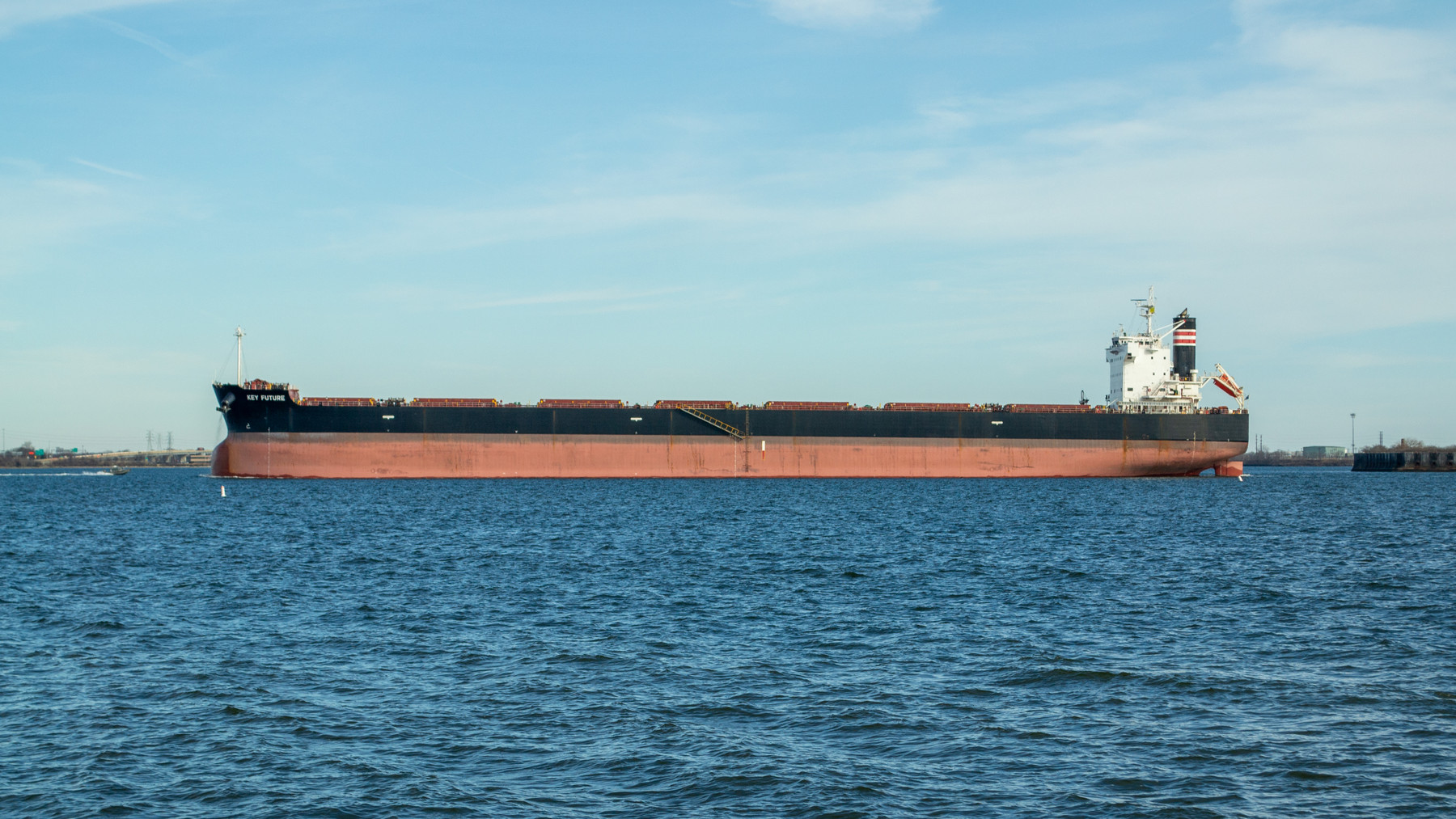
A giant cargo ship heading from China to Australia is giving a potential lower-carbon shipping fuel a serious ocean-going workout. Mineral Europa, a 210,000-deadweight-tonne bulk carrier, has begun its first voyage using ammonia propulsion, according to its owner, Belgian shipping group CMB.TECH.
The company announced the voyage on October 9 and describes the vessel as the world’s first ammonia-powered dry bulk carrier. The milestone brings ammonia into a major shipping category: the large vessels that move bulk commodities around the world.
Riviera Maritime Media reported that Mineral Europa was underway from Qingdao, China, on charter to Australian mining company Fortescue. A CMB.TECH spokesperson told the publication that the ship had taken on 1,000 tonnes of green ammonia for the voyage. That puts an actual fuel supply alongside the new propulsion hardware.
The engine has already been through factory testing. In June, manufacturer WinGD announced acceptance testing of its X72DF-A at CSSC Engine Co. in China, witnessed by Lloyd’s Register and representatives of two other classification societies. The system combines high-pressure ammonia injection with a small amount of pilot fuel that helps the combustion process.
That pilot fuel matters. WinGD gives a targeted dose of about 5% at full load. Ammonia contains no carbon, but the whole ship cannot therefore be described as emissions-free. The manufacturer reports greenhouse-gas reductions of more than 90% in ammonia-mode engine testing; that figure is not a measured result for this voyage.
The wider climate accounting also starts before fuel reaches the ship. The International Maritime Organization assesses marine-fuel emissions from production through transport and use onboard, a scope called well-to-wake. Its framework includes carbon dioxide, methane and nitrous oxide. How ammonia is made, and what emerges from the engine, both matter.
Safety is another part of making the technology useful. Ammonia is toxic, and handling it requires safeguards for crews and ports. IMO’s future-fuels work identifies toxicity, fires and explosions among the risks that vessel design and operating procedures must address. Successful propulsion is one piece of that larger job.
CMB.TECH says it is investing in storage and refuelling infrastructure as well as ships. It plans 21 ammonia-powered vessels by 2029, including 18 dry bulk carriers, one container ship and two chemical tankers. Those are scheduled deliveries, with the usual distance between an order book and a working fleet.
For now, Mineral Europa supplies something concrete to watch: a large commercial ship taking a new fuel into service. The next useful evidence will come from operations, including fuel use, reliability and verified emissions across the full journey. Shipping’s fuel transition now has another place to gather those answers: out at sea.
Sources
- CMB.TECH: Mineral Europa voyage announcement, October 9, 2026
- Riviera Maritime Media: voyage and green-ammonia bunkering report, October 9, 2026
- WinGD: X72DF-A engine approval and testing, June 15, 2026
- International Maritime Organization: assessing marine fuels from production to ship exhaust
- IMO Future Fuels: ammonia-vessel design and operational risks
Photo: Veggies, “Key-Future-Kamsarmax-Bulk-Carrier-in-Baltimore-Harbor.jpg” / Wikimedia Commons, CC BY-SA 4.0. EXIF orientation normalized where applicable; proportional resize and JPEG compression only. No crop, retouching or generative modification. Delivery adaptation remains under CC BY-SA 4.0.