A new test has given AI a demanding assignment: prove mathematical statements whose human-written solutions had not been made public. In results released October 14, First Proof reports that the multi-model ProofCouncil system met its correctness threshold on nine of ten research problems. That threshold includes arguments with minor, readily correctable errors; it does not mean nine flawless proofs.
The useful development is the combination of capable systems and close scrutiny. Rather than collecting striking success stories, the project’s new preprint gives mathematicians a common set of problems, a stated scoring system and a public record of what worked. These were problems already solved by their human contributors, not ten previously unsolved conjectures.
The report’s authors are Mohammed Abouzaid, Nikhil Srivastava, Rachel Ward and Lauren Williams. Their team tested five systems on October 2–5. Thirty expert mathematicians then assessed anonymized submissions at Carnegie Mellon’s Institute for Computer-Aided Reasoning in Mathematics, scoring correctness, clarity and attribution separately. The point was to ask whether a proof could help another mathematician understand the result, as well as whether its argument held up.
ProofCouncil combines models from OpenAI, Anthropic and Google. A GPT-6 Astra setup using one model call per problem reached the correctness threshold on seven problems. The systems used different workflows, amounts of compute and access to web search, so the totals are not a controlled comparison of base models. Nor does this selected ten-problem set establish a success rate for mathematics generally.
One result offers a glimpse of the potential. For a problem concerning K3 surfaces, the report says all three referees judged ProofCouncil’s proof essentially flawless. One preferred it to the human solution because it avoided a difficult calculation through a simpler decomposition. That is a specific reviewer assessment, not proof that AI is generally the better mathematician.
The same report makes the unfinished work visible. For one computation-heavy problem, reviewers could not fully check the calculations within the allotted time, even though some answers received favorable scores. Explanations and citations also remained uneven. Those limits matter because an answer that is hard to verify can create work for the researcher it is meant to help.
First Proof has released links to the problems, human and AI solutions, review reports and system logs. The next opportunity is practical: researchers can inspect the reasoning, challenge the scores and test which approaches are genuinely useful. The public work behind the headline is part of the advance.
Sources
- First Proof: third-batch benchmark and released supporting materials
- Abouzaid, Srivastava, Ward and Williams: First Proof Third Batch, October 14, 2026
- Full report source: methods, scoring tables and problem-by-problem review summaries
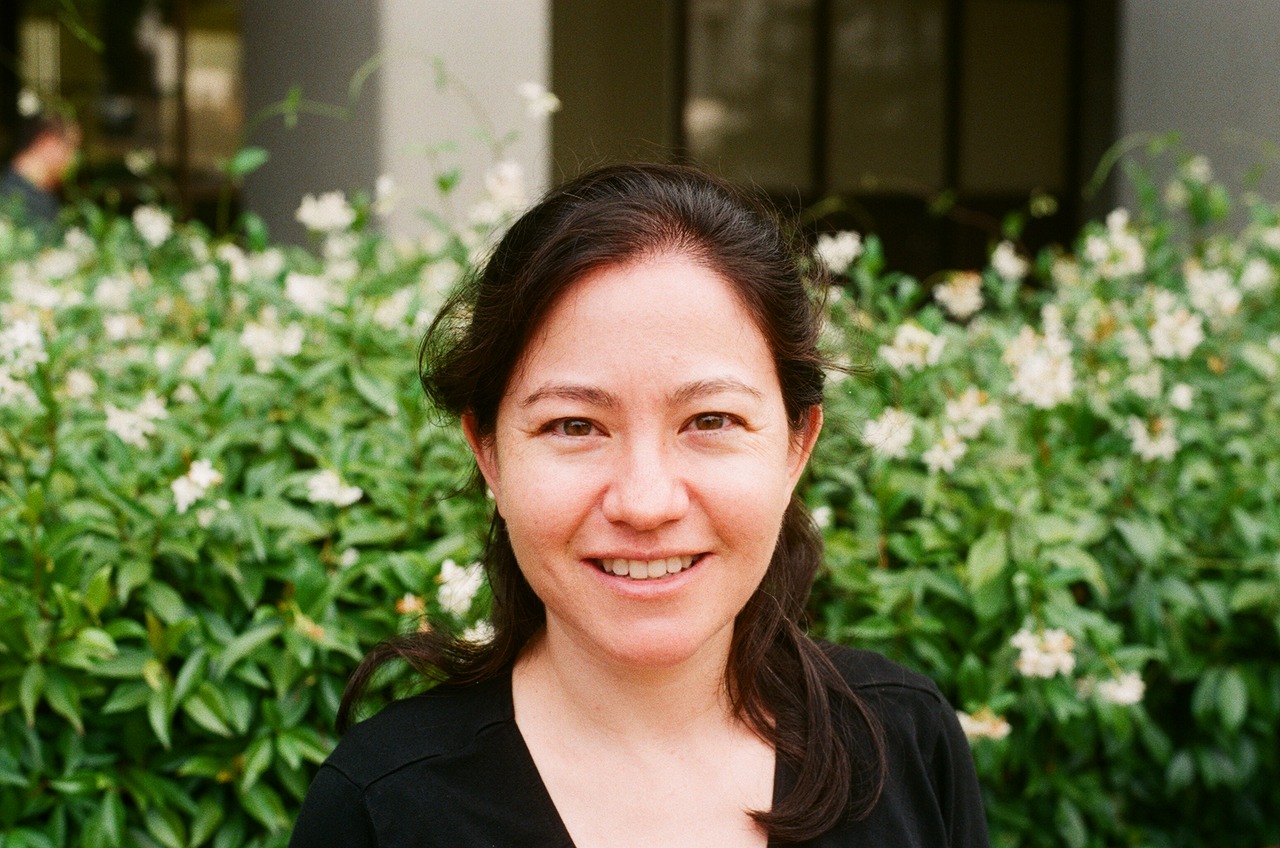
Photo: George M. Bergman, 2015 portrait, CC BY-SA 4.0. (resized)